SoftPOS Growth Is Reshaping the POS Hardware Market in 2026
SoftPOS Growth Is Reshaping the POS Hardware Market in 2026
Published: July 28, 2026
The global point-of-sale industry is entering a new phase of transformation. As SoftPOS adoption accelerates and component costs remain under pressure, POS software providers, system integrators and hardware distributors are reconsidering how devices should be selected, tested and deployed.
Recent industry developments show that the future of POS hardware is not simply about replacing traditional terminals. Instead, the market is moving toward more standardized, integrated and deployment-friendly hardware platforms.
Retail Technology Partners Focus on Scalable Deployment
RetailNOW 2026 is being held from July 26 to 28 at Caesars Forum in Las Vegas. The event brings together more than 1,600 professionals from the retail, restaurant and grocery technology channels, including software providers, value-added resellers, payment companies and hardware manufacturers.
The event reflects an important change in the retail technology market: customers are looking beyond individual products and focusing more on complete deployment capabilities.
For POS software companies and system integrators, common hardware concerns now include:
Maintaining consistent configurations across different projects;
Reducing repeated software and peripheral compatibility testing;
Ensuring stable availability for future deployments;
Supporting printers, cash drawers, scanners and customer displays;
Receiving faster technical assistance when hardware issues occur.
As a result, the ability to provide a repeatable hardware platform is becoming increasingly important.
SoftPOS Is Changing Payment Hardware Requirements
SoftPOS technology allows an NFC-enabled Android or iOS device to accept contactless payments without requiring a separate traditional payment terminal. SUNMI, Ingenico and other payment technology companies are continuing to develop platforms and devices around this model.
This development is gradually changing the boundary between POS terminals and payment devices.
However, SoftPOS does not eliminate the need for dedicated commercial hardware. Restaurants, supermarkets, specialty stores and service businesses still require stable terminals for functions such as:
Connecting multiple peripherals;
Processing inventory and order-management tasks;
Operating continuously at fixed checkout counters;
Supporting customer displays and receipt printers;
Running Windows- or Android-based business applications.
The growing adoption of SoftPOS therefore creates two parallel hardware requirements: mobile NFC-enabled devices for flexible payments and fixed POS terminals for complete store operations.
POS Hardware Demand Is Becoming More Specialized
Omdia forecasts that global mobile POS display shipments will decline by approximately 11.5% in 2026, while standalone POS display shipments are expected to decrease by around 8.6%. The research attributes this change partly to SoftPOS adoption and rising hardware component costs.
This does not necessarily indicate the disappearance of POS hardware. Instead, it suggests that low-end, single-purpose devices may face greater pressure, while integrated and customizable commercial hardware could become more valuable.
Hardware features receiving greater attention include:
Stable Windows and Android configurations;
Multiple and consistent I/O interfaces;
NFC and peripheral integration capability;
Customer-facing display options;
Compact or foldable structures;
OEM branding and enclosure customization;
Reliable quality-control and after-sales support.
For software providers, selecting a standardized hardware configuration can also reduce development work. Once the operating system, processor, memory, storage and interfaces have been validated, the same configuration can be reused across multiple customer projects.
Memory Supply Remains an Important Cost Factor
Memory and storage supply conditions continue to affect commercial hardware pricing.
TrendForce estimates that the NAND Flash market will experience a supply deficit of approximately 4% to 5% in 2026. AI-related demand and limited capacity expansion are expected to keep the market undersupplied during the year.
For POS projects, this means that software companies and distributors should confirm key specifications earlier, especially:
128GB or 256GB SSD capacity;
Standard memory configurations;
Acceptable alternative processors;
Required operating system versions;
Expected sample and bulk-order schedules.
Rather than changing components whenever market prices fluctuate, establishing one or two approved configurations can help maintain compatibility and make future purchasing more predictable.
Building a More Reliable POS Hardware Platform
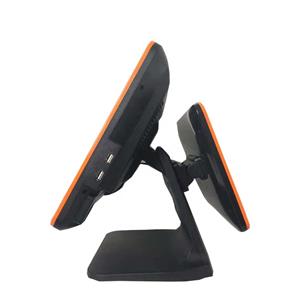
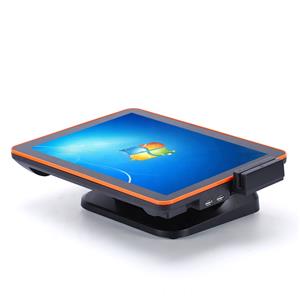
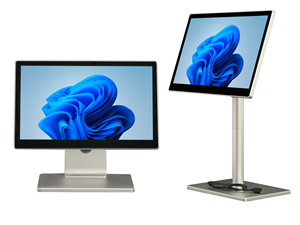
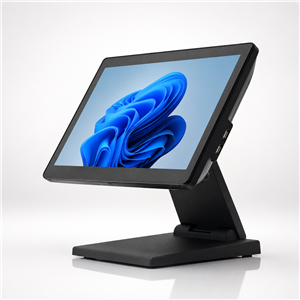
Qingwu Electronic Technology Co., Ltd. specializes in commercial POS hardware, including all-in-one POS terminals, touch displays, Mini PCs, KDS devices, stands, printers, scanners and cash drawers.
The company supports Windows and Android hardware configurations, logo customization and project-based structural or interface customization. Every device undergoes a 48-hour aging test before shipment. Samples can normally be prepared within three days, while standard bulk orders can be completed within approximately seven to fourteen days.
As the POS market becomes increasingly focused on integration and repeatable deployment, hardware suppliers must provide more than a product catalogue. Stable configurations, compatibility testing, quality control and responsive technical support are becoming essential parts of a long-term hardware partnership.
For POS software providers, system integrators and distributors, the key question for 2026 is no longer simply which terminal has the lowest price. It is which hardware platform can be tested once, deployed repeatedly and supported reliably as the business grows.
https://www.tomshardware.com/tech-industry/adata-chairman-says-dram-shortage-will-last-another-10-years